
Postoperative reviews.
On your schedule.
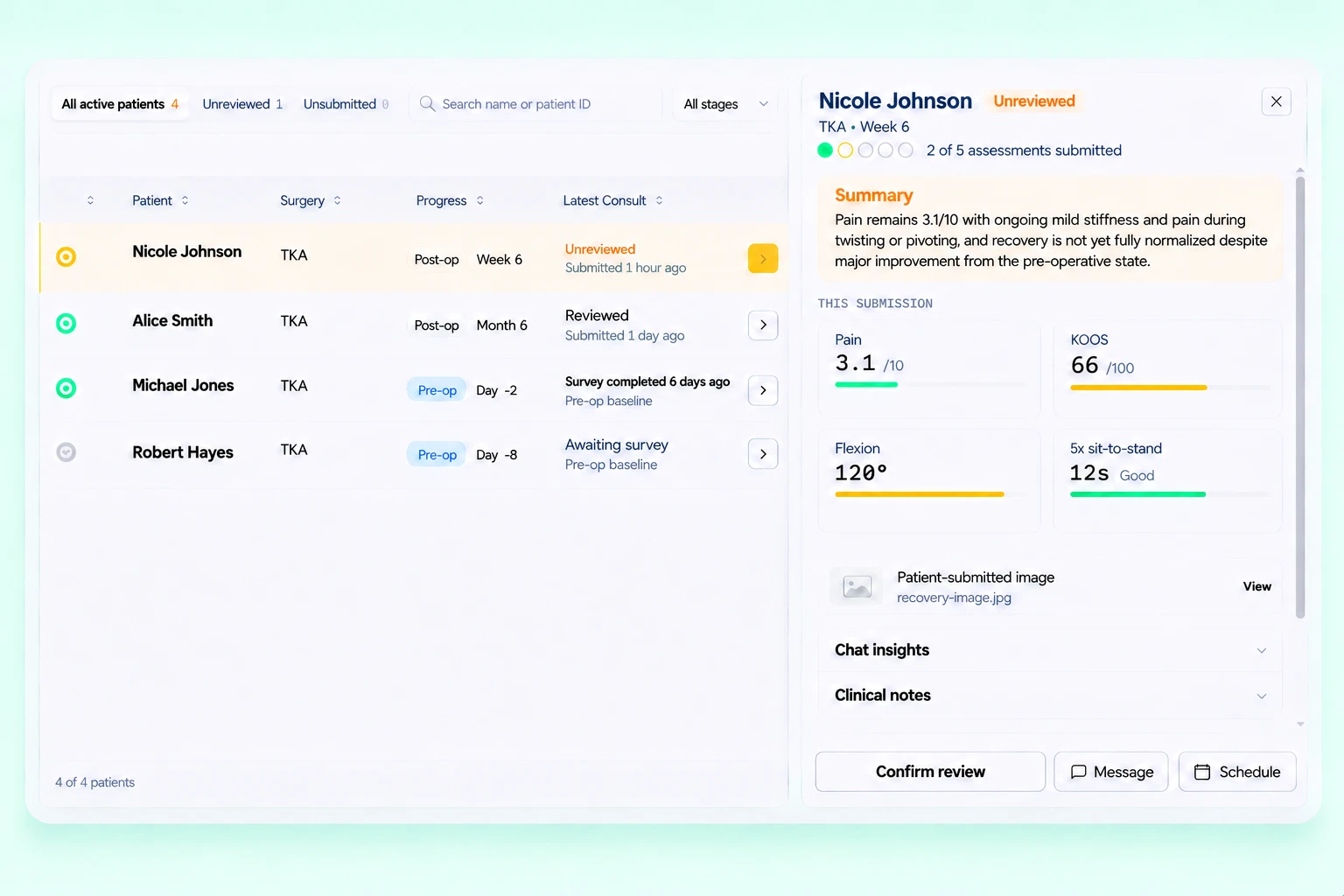
Fios brings patient-reported symptoms, function, images and questions together for your review. Review joint replacement follow-ups asynchronously, including in the downtime between surgeries, while keeping clinical judgment in your hands.
Not every follow-up needs an appointment
You need to know how your patient is recovering after surgery.
That doesn’t mean every review needs you and the patient in the same place at the same time.
Patients complete a structured assessment that’s comparable to what you’re currently doing in the clinic. You inspect their submission, compare it with benchmarks and previous assessments, and respond when your schedule allows.
If you need more information or an in-person assessment, you make the call.
A clearer picture of recovery before you respond
A score tells you part of the story. The patient’s experience adds context.
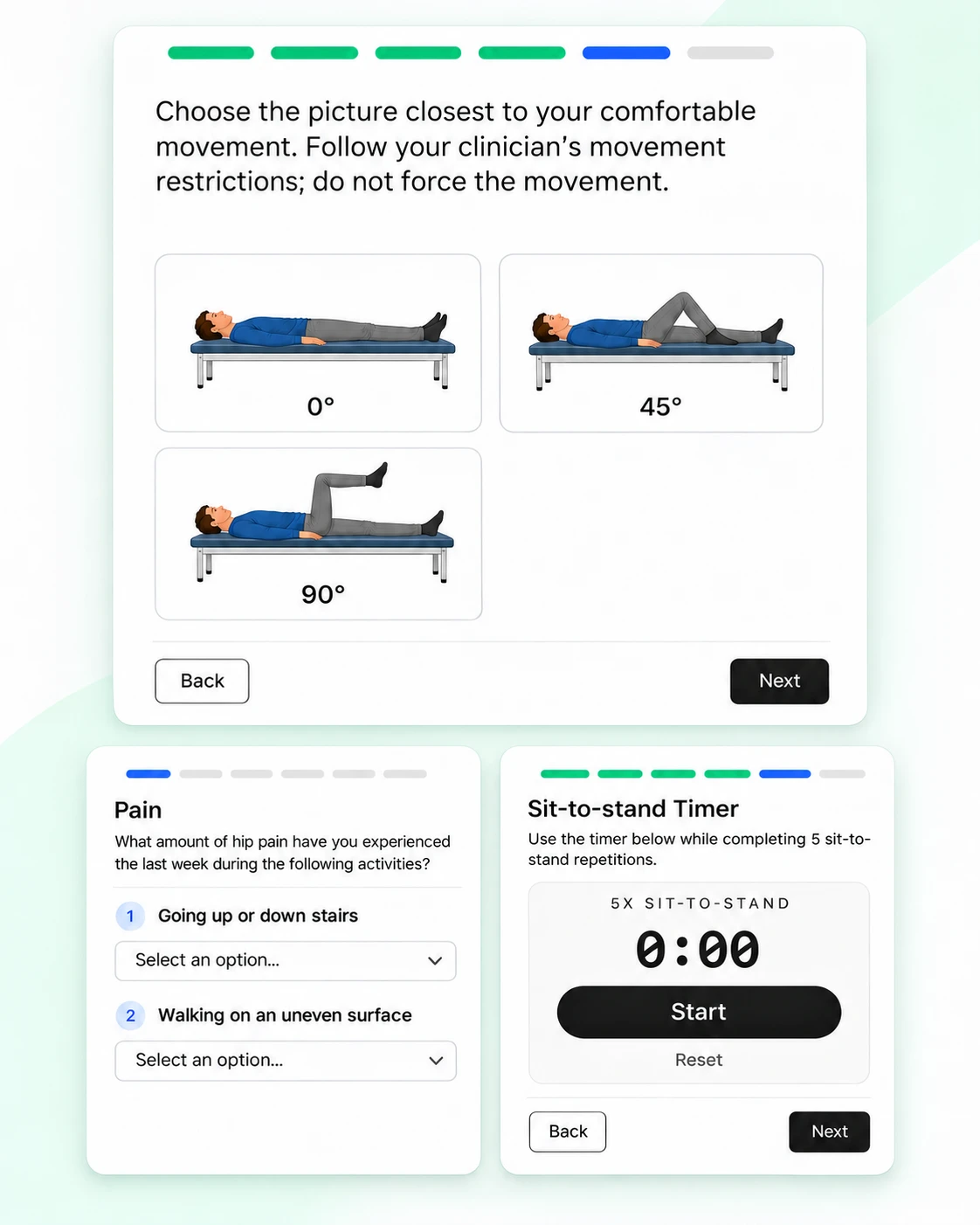
Fios collects both patient-reported and patient-recorded information for the review, including:
- Pain and symptoms: what the patient is experiencing and how it has changed.
- Function and daily activity: how they are managing movement and everyday tasks.
- Patient-submitted images: wound images, range of motion, supporting detail you can inspect.
- Questions and concerns: what the patient wants you to understand about their recovery.
Guided follow-up questions help clarify broad or incomplete answers. Responses, supporting detail and previous assessments sit together so you can inspect the information behind the summary.
Answers now. Without a trip to the clinic.
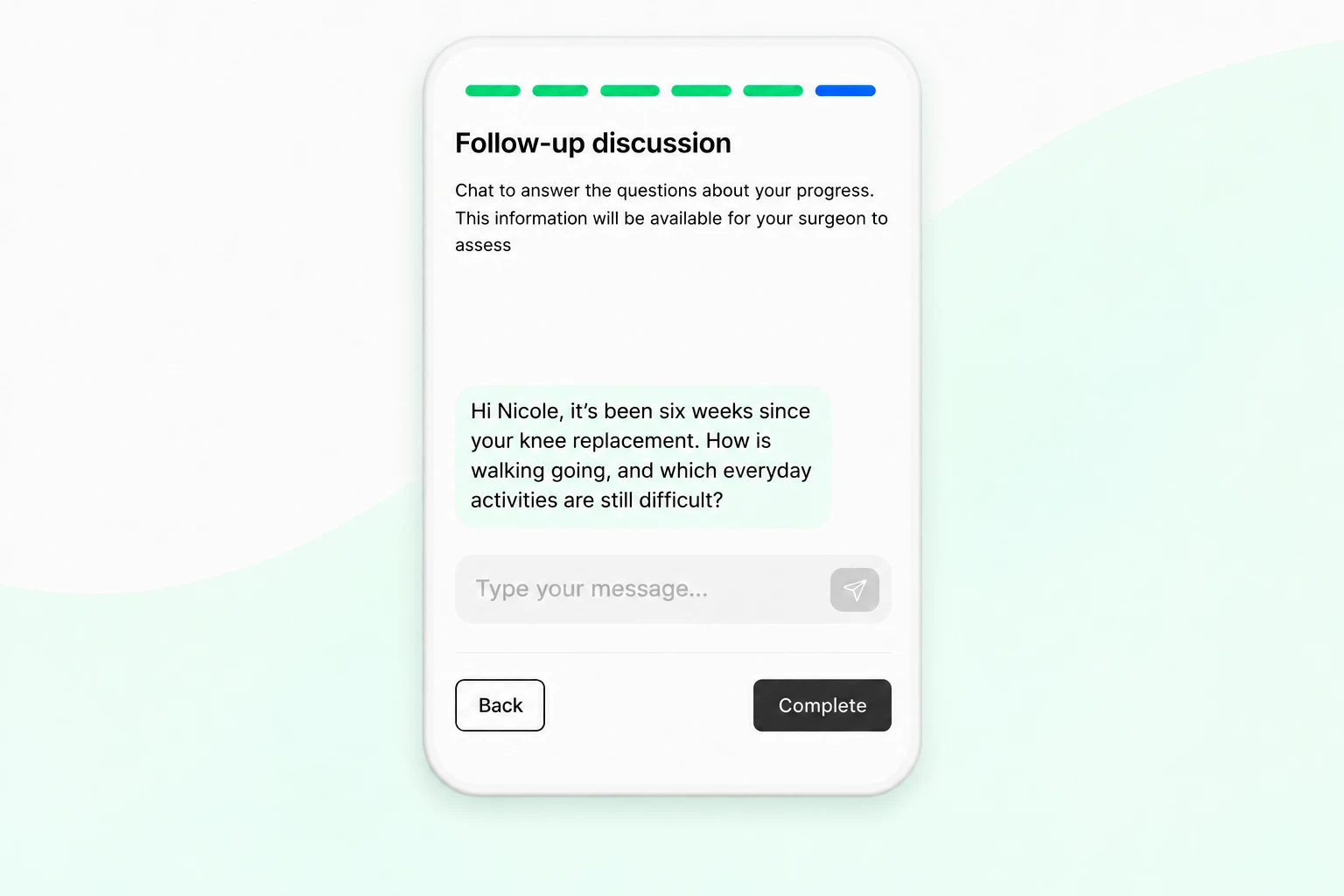
Each assessment is a two-way conversation. Patients share how they’re recovering, ask questions and get immediate guidance and encouragement based on your protocols, without you needing to be there.
Alongside ongoing pathway support, these structured check-ins give patients dedicated time to talk through their recovery at key stages.
How it works
Enroll the patient
Add the patient to the relevant joint replacement pathway and enable follow-ups.
Collect the assessment
The patient receives an SMS link and completes guided questions and relevant tasks remotely.
Review and respond
Review the assessment, then respond remotely, ask for more detail or arrange an in-person visit.
Questions before you start.
Less travel for patients. More flexibility for you.
For patients whose follow-up can be completed remotely, there is no journey to clinic or waiting-room visit. For you, the review can fit around your operating day.